
I. Introduction
Chicano fashion isn’t just about clothes — it’s a living language of identity, resilience, and pride. Rooted in the Mexican-American experience, this unique Chicano style blends activism, artistry, and attitude. From the sharp zoot suits of the 1940s to the bold lowrider culture aesthetics of today, every detail tells a story of belonging and resistance.
This fashion movement emerged as more than a trend — it became a cultural symbol of empowerment. Whether through pressed khaki pants, Pendleton shirts, or meticulously styled hair, each look celebrates individuality while paying tribute to generations of struggle and self-expression. Chicano fashion continues to evolve, influencing everything from streetwear to high fashion runways, proving that heritage and creativity go hand in hand.
Table of Contents
II. The Origins of Chicano Fashion
To understand the roots of Chicano fashion, we must look back to a time when clothing represented far more than personal appearance — it was an act of resistance. The foundations of this aesthetic were built upon decades of social struggle, cultural identity, and the need to be seen in a world that often sought to silence Mexican-American voices. Each stitch and crease in the fabric symbolized dignity, defiance, and pride.
1. Zoot Suits and the Pachuco Legacy (1940s–50s)
The story of Chicano style begins with the Pachuco subculture, a group of young Mexican-American men and women who redefined urban cool in the 1940s. Their signature look — the zoot suit — featured long draped coats, high-waisted pants, wide lapels, and chains that swayed with rhythm and confidence. More than a fashion statement, it was a declaration of self-worth and defiance during a time of racial discrimination and social inequality.
The Pachuco legacy became a cornerstone of Chicano fashion, representing rebellion and pride in Mexican-American identity. Despite facing police harassment and being stigmatized after the 1943 Zoot Suit Riots in Los Angeles, Pachucos held their heads high. Their bold style and fearless attitude laid the groundwork for what would later become the Cholo aesthetic, blending pride in heritage with street sophistication.
2. The Chicano Movement’s Cultural Reawakening (1960s–70s)
As the Chicano Movement gained strength in the 1960s and 70s, fashion evolved into a powerful visual language of activism and solidarity. Clothing became a political and cultural expression — a way to say “We are here, and we belong.” Activists and community members proudly wore Chicano-style outfits infused with symbols of unity and protest: brown berets, bandanas, and embroidered jackets featuring the Aztec eagle or cultural slogans.
During this period, Chicana fashion also rose as a force of empowerment. Women reimagined traditional femininity through bold makeup, hoop earrings, and carefully styled hair that reflected confidence and self-definition. Their look merged grace and strength — a balance that mirrored their vital role in the movement.
The Chicano movement’s fashion was not just about aesthetics; it was a declaration of cultural pride and political awareness. This reawakening connected generations of Mexican-Americans, ensuring that the fight for equality and identity would forever be woven into the fabric of Chicano fashion.
III. Key Elements of Traditional Chicano Style
Chicano style perfectly balances classic tailoring with street practicality — a seamless blend of elegance and toughness. Every outfit tells a story: the pressed baggy pants, the checkered Pendleton shirts, the gleaming chain, and the carefully folded bandana. Together, they form more than a look — they form a legacy. Each piece, color, and accessory symbolizes both individual creativity and a shared sense of cultural identity rooted in resilience and pride.
From neighborhood streets to global runways, the Cholo aesthetic and its feminine counterpart, the Chola aesthetic, continue to define Mexican-American streetwear — commanding respect while celebrating authenticity.
1. The Cholo and Chola Aesthetic
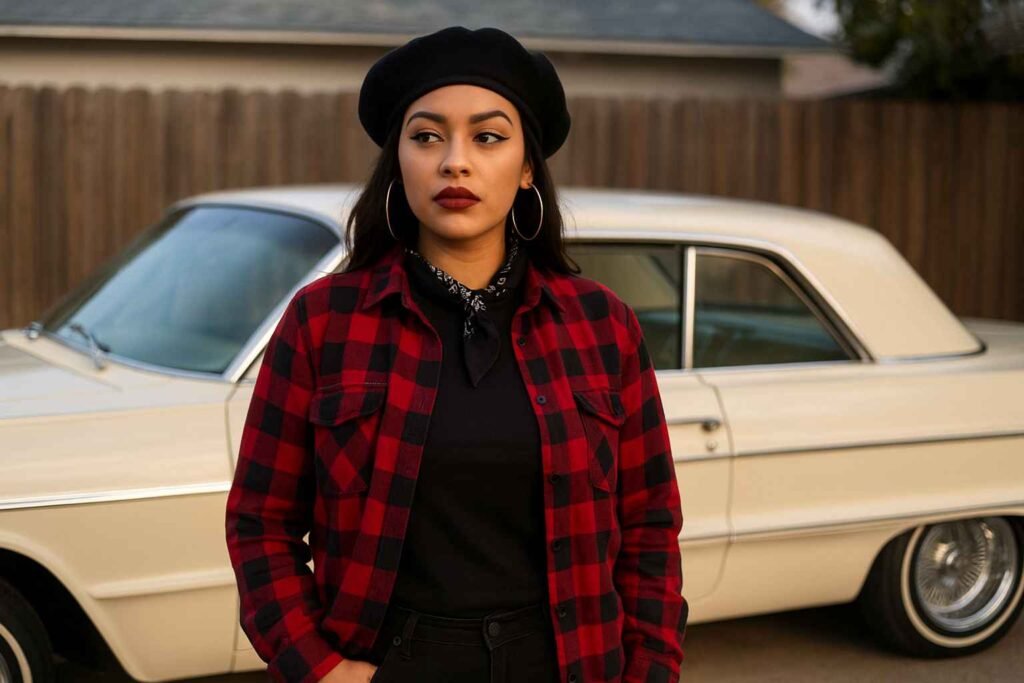
The Cholo aesthetic lies at the heart of traditional Chicano fashion — a style born from the streets, shaped by community, and refined through generations. This look blends the rugged utility of workwear with lowrider-inspired finesse. Flannel or Pendleton shirts buttoned only at the top, creased khaki pants or oversized Dickies, and spotless sneakers define the male Cholo style. Each piece emphasizes discipline, pride, and loyalty — values deeply embedded in lowrider culture and neighborhood identity.
The Chola aesthetic, on the other hand, represents empowerment and defiance through feminine strength. Chicana makeup — featuring bold eyeliner, dark lip liner, and precisely arched brows — conveys attitude and confidence. Large hoop earrings, slicked-back hair, and stylish bandanas worn as head wraps complete the look. Far from mere fashion choices, these details speak of Chicana resilience, community pride, and a refusal to conform to Eurocentric beauty standards.
Together, the Cholo and Chola aesthetics symbolize a proud declaration of identity — a statement that says, “We are here, and we define our own style.”
2. Symbolic Accessories
In Chicano fashion, accessories are more than decoration — they are symbols of identity and belonging. A simple bandana, folded and worn around the head or neck, reflects unity, loyalty, and respect for heritage. Gold chains, crucifixes, and rosary beads pay tribute to faith and family, serving as visual anchors of Mexican-American heritage.
Within lowrider culture, accessories also mirror artistry and craftsmanship. Sunglasses like Locs, polished shoes, or perfectly starched hats aren’t just fashion statements; they communicate dignity and self-respect. Every detail — from the shine of a belt buckle to the color of a flannel — holds personal meaning.
These symbolic pieces reinforce the essence of Chicano style: pride in one’s roots, solidarity with the community, and respect for tradition.
IV. The Role of Chicano Fashion in Cultural Identity
For many within the Chicano community, fashion is a daily act of storytelling — one that reclaims cultural space in a society that once sought to erase or stereotype their voices. Each outfit becomes a canvas of cultural pride, resistance, and empowerment, connecting the past to the present through color, texture, and attitude.
Chicano fashion transforms clothing into a visual language of Mexican-American heritage, allowing wearers to carry their history with every step.
1. Expression of Pride and Resistance
From the Pachuco suits of the 1940s to the Cholo aesthetic of modern streetwear, Chicano style has always embodied pride and protest. In a world where Mexican-Americans were often marginalized, clothing became a form of resistance — a way to stand tall, look sharp, and demand respect.
Pressed khakis, flannels, and perfectly styled hair were not just about appearance; they were about reclaiming dignity. Wearing one’s identity openly and confidently became an act of empowerment, transforming fashion into a political and cultural statement.
Through this style, generations of Chicanos have said: “We will not be invisible.”
2. The Feminine Power in Chicana Fashion
While men defined one side of the Chicano fashion movement, Chicana women redefined its soul. The Chola aesthetic turned traditional femininity into a symbol of strength and independence. Chicana makeup, hoop earrings, sharp brows, and bold lips weren’t acts of vanity — they were visual armor against societal expectations.
Modern Chicana fashion celebrates self-expression and empowerment, merging toughness with beauty. Whether through vintage flannels paired with gold jewelry or statement tattoos that honor family heritage, Chicana women continue to redefine what it means to be powerful and proud.
In every way, their fashion choices echo a message of resistance: “Beauty is strength, and strength is ours.”
V. The Influence of Chicano Fashion on Modern Streetwear
From the boulevards of East Los Angeles to the fashion capitals of the world, Chicano streetwear has profoundly influenced how urban fashion is designed, styled, and perceived. Once a local expression of identity and defiance, this movement has evolved into a global style statement that bridges hip-hop fashion, LA street culture, and modern pop culture influence.
The crisp silhouettes, bold accessories, and lowrider-inspired details that once defined barrio neighborhoods now inspire entire collections by luxury brands and independent designers alike.
1. Chicano Style in Hip-Hop and Pop Culture
The fusion between Chicano fashion and hip-hop culture began in the late 1980s and 1990s, when West Coast rap emerged as a dominant cultural force. Artists like Kid Frost, Cypress Hill, and Mr. Cartoon celebrated Chicano streetwear through their music, visuals, and personal style. Their signature looks — flannel shirts, khaki pants, bandanas, and tattoos — became synonymous with authenticity and artistic rebellion.
As the movement gained global traction, mainstream icons like Kendrick Lamar, Dr. Dre, and Snoop Dogg incorporated elements of Chicano aesthetics into their videos and public appearances. Hollywood films such as Blood In, Blood Out and Mi Vida Loca also amplified the imagery, cementing the look as an essential part of LA street culture and hip-hop heritage.
Today, social media influencers and musicians continue to honor this connection, blending Chicano streetwear with contemporary fashion trends — proving that what began as a local style has become a timeless global phenomenon.
2. Fashion Brands Inspired by Chicano Culture
The lasting impact of Chicano culture on fashion is visible across both independent labels and major brands. Companies like Joker Brand, Firme Clothing, and OG Abel draw inspiration directly from lowrider aesthetics, graffiti art, and neighborhood pride. Their designs highlight sharp typography, bold prints, and symbolic imagery that echo barrio culture and community heritage.
In recent years, mainstream fashion houses have also collaborated with Chicano-inspired artists to capture the authenticity of this style. Collections inspired by LA streetwear often feature Pendleton patterns, embroidered motifs, and silhouettes reminiscent of traditional Cholo fashion. While these collaborations bring well-deserved recognition, they also raise discussions around representation and respect for cultural roots — ensuring that homage never crosses into exploitation.
VI. The Globalization and Misrepresentation of Chicano Style
As Chicano fashion gains international popularity, it walks a fine line between cultural appreciation and cultural appropriation. The global fashion industry’s fascination with its aesthetics has introduced Chicano-inspired looks to new audiences — but often without context, meaning, or respect for its historical roots.
While it’s encouraging to see global brands and influencers embrace Mexican-American heritage, the challenge lies in maintaining authenticity and proper representation.
1. Cultural Appreciation vs. Appropriation
Appreciating Chicano style means understanding its origin — a story of resilience, unity, and cultural defiance. Appropriation, however, happens when brands or individuals copy these aesthetics for profit or aesthetics without acknowledging their history.
For example, using bandanas, flannels, or Cholo imagery in fashion campaigns without crediting their Chicano roots erases the lived experiences that gave those symbols power. True appreciation involves collaboration with Chicano designers, supporting community-led initiatives, and representing the culture respectfully.
By emphasizing authenticity and partnership, the fashion industry can transform cultural borrowing into meaningful cultural exchange.
2. Media and Stereotyping
Movies, music videos, and social media have played major roles in shaping — and sometimes distorting — the public perception of Chicano identity. Early Hollywood portrayals often reduced Cholos and Cholas to gang stereotypes, overshadowing the creativity and cultural pride embedded in their style.
Fortunately, modern filmmakers, photographers, and influencers are reclaiming the narrative. Documentaries, fashion editorials, and digital storytelling now highlight Chicano fashion as a symbol of artistry, resistance, and community pride. These efforts are crucial for preserving the integrity of Chicano streetwear while educating audiences about its true meaning.
VII. The Revival: Chicano Fashion in the 21st Century
A new generation of artists, designers, and cultural innovators is redefining Chicano fashion for the modern world. Blending tradition with innovation, they’re using style as a tool for empowerment, storytelling, and sustainability.
This cultural revival isn’t just about nostalgia — it’s about reclaiming a legacy and adapting it to reflect today’s diverse and interconnected world.
1. New Voices and Creative Designers
Emerging modern Chicano designers are reshaping how the world views streetwear and heritage fashion. Brands like Barrio Dandy, Bella Doña, and Hija de tu Madre combine Chicano aesthetics with contemporary cuts and global sensibilities.
These creators pay homage to the lowrider culture and Chola elegance while experimenting with modern fabrics, sustainable practices, and inclusive representation. Their work bridges generations — honoring the past while amplifying the voices of today’s Chicana and Chicano artists.
This creative resurgence has sparked a cultural revival, inspiring pride and global recognition for Mexican-American fashion heritage.
2. The Future of Chicano Fashion
The future of Chicano fashion lies in innovation, sustainability, and cross-cultural collaboration. As technology reshapes the fashion landscape, Chicano-inspired brands are using digital art, virtual fashion shows, and eco-conscious materials to stay relevant and responsible.
What remains constant, however, is the heart of the movement — cultural pride and community empowerment. Whether showcased on global runways or celebrated in local barrios, the next era of Chicano style will continue to honor its roots while expanding its creative boundaries.
Through this ongoing evolution, Chicano fashion stands as a symbol of unity, resilience, and timeless style — a reminder that heritage and innovation can coexist beautifully.
VIII. Styling Tips Inspired by Chicano Fashion
Intro:
If you’re inspired by Chicano culture, you can honor its roots through mindful styling that reflects individuality without losing sight of authenticity. The essence of Chicano-inspired fashion lies not just in the clothes, but in the attitude — confidence, pride, and respect for heritage. Whether you’re aiming for subtle streetwear inspiration or a full cultural statement, these tips can help you style with intention.
1. Everyday Outfits with Chicano Influence
Bringing Chicano outfit ideas into your daily wardrobe doesn’t require going full vintage or costume-style. The goal is to blend traditional elements with modern streetwear for a look that feels natural and respectful.
- Start with classics — Incorporate staples like plaid or flannel shirts, denim jackets, or pressed khakis. These pieces nod to the Cholo aesthetic without imitation.
- Balance textures — Combine soft fabrics with structured silhouettes. For example, wear a loose flannel over a crisp white T-shirt with dark jeans and sneakers for effortless streetwear styling.
- Add statement accessories — Silver jewelry, bandanas, or chain necklaces can bring subtle authenticity. Keep it minimal — each piece should enhance the outfit, not dominate it.
- Play with layering — Layering is central to the Chicano streetwear look. Overshirts, hoodies, and Pendleton-style patterns create depth while maintaining comfort.
This approach keeps your look versatile and respectful, blending cultural fashion inspiration with modern urban aesthetics.
2. Do’s and Don’ts: Respectful Cultural Representation
When styling with influences from Chicano culture, authenticity and awareness are key. Here’s how to appreciate the fashion without crossing into appropriation:
✅ Do:
- Learn about the history of Chicano fashion — understanding its roots in cultural pride and resistance gives meaning to your look.
- Support Chicano-owned brands and artists who continue to shape the movement.
- Use Chicano-inspired fashion to celebrate diversity and individuality.
❌ Don’t:
- Use style elements that perpetuate stereotypes (like mimicking gang imagery or offensive gestures).
- Treat the fashion as a costume — it’s a living culture, not a trend.
- Copy the look without understanding its symbolism or significance.
Approaching Chicano-inspired outfits with respect ensures your style is both fashionable and meaningful. It’s not about replication — it’s about appreciation and connection.
IX. FAQs About Chicano Fashion
What defines Chicano fashion?
Chicano fashion is a blend of cultural identity, pride, and creativity rooted in the Mexican-American experience. It features elements like zoot suits, flannel shirts, baggy pants, Pendleton plaids, and symbolic accessories that represent unity, resilience, and self-expression.
How is Chicano fashion different from Cholo style?
While Chicano fashion encompasses the broader cultural and artistic identity of the Mexican-American community, Cholo style represents a specific street aesthetic within it — characterized by crease-front khakis, buttoned-up flannels, bandanas, and lowrider culture influences. In short, Cholo fashion is one expression of the wider Chicano movement.
Can non-Chicanos wear Chicano-inspired clothing?
Yes, anyone can respectfully appreciate Chicano-inspired fashion, as long as it’s done with cultural understanding and respect for its history. The key is to acknowledge its origins, avoid stereotypes, and, when possible, support Chicano designers and brands that authentically represent the culture.
What are some famous Chicano fashion brands?
Popular and authentic brands that celebrate Chicano culture include Joker Brand, Firme Clothing, Barrio Dandy, Bella Doña, and Hija de tu Madre. These labels combine traditional influences with modern streetwear and are often founded by Chicano and Chicana designers.
How has Chicano fashion evolved in the 21st century?
In the 21st century, Chicano fashion has evolved into a global movement, blending heritage with innovation. Today’s modern Chicano designers emphasize sustainability, gender inclusivity, and digital expression, while still honoring the community’s rich history and cultural legacy.
Read Previous Article: Chic & Charming: 10 Trendy Tea Party Fashion Dress Ideas for Your Next Gathering
Go to Home page
1 thought on “Chicano Fashion: A Cultural Expression of Identity and Style”